

Chiropractor vs. Physical Therapist: What's the Difference and Which Do You Need?

If you're dealing with back pain, a sports injury, or a nagging musculoskeletal problem, you've probably wondered whether you should see a chiropractor or a physical therapist. It's a fair question, and the honest answer is that it depends on what's going on and what kind of care you're looking for.
Both chiropractors and physical therapists treat musculoskeletal conditions, and there's more overlap between the two professions than most people realize. But there are also meaningful differences in training, approach, and the tools each profession uses that are worth understanding before you make a decision.
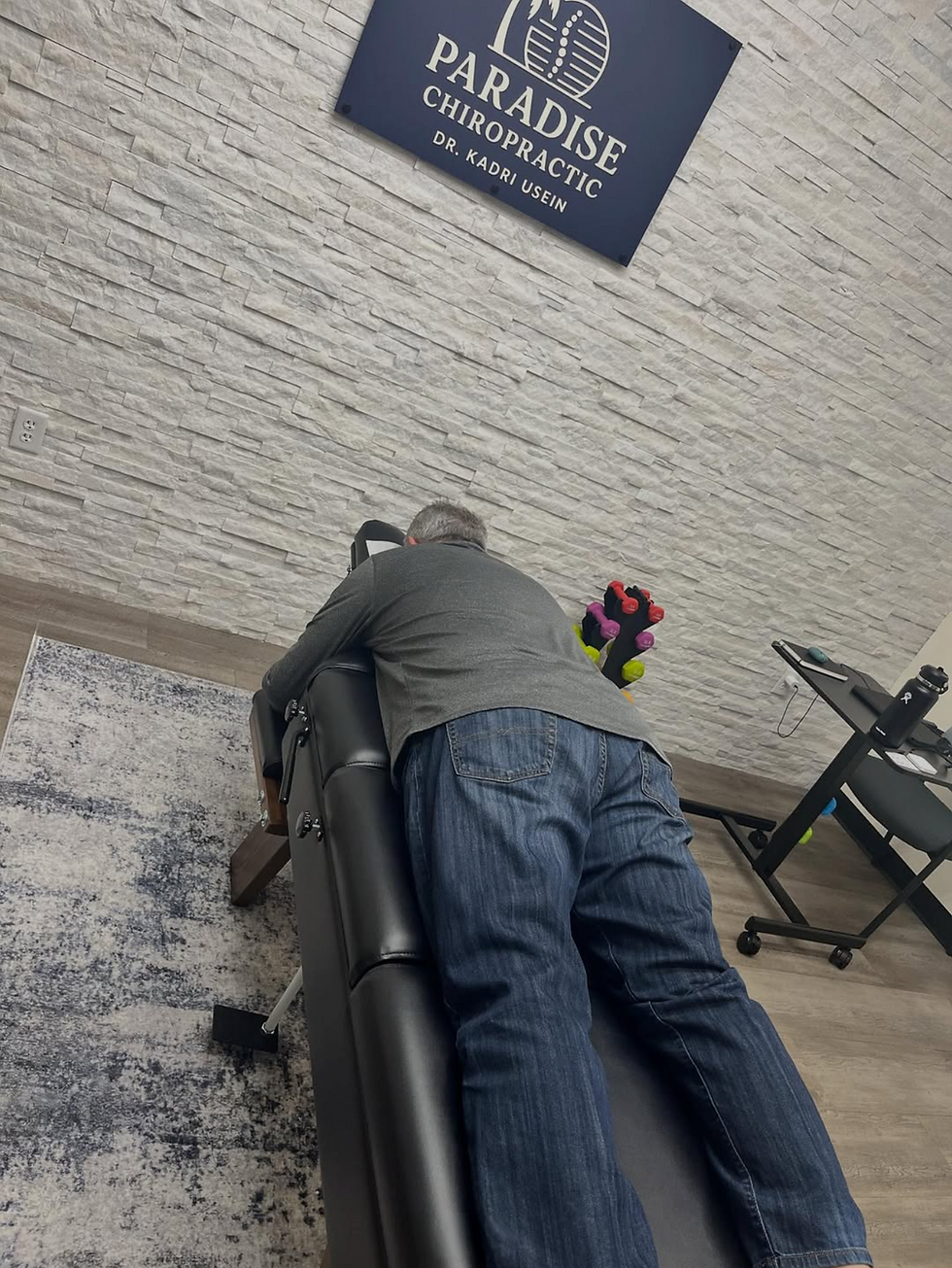
What Does a Chiropractor Do?
Chiropractors are healthcare providers who specialize in the diagnosis and treatment of musculoskeletal conditions, with a particular focus on the spine and nervous system. The core of chiropractic care is the chiropractic adjustment, a precise, controlled force applied to a joint to restore proper movement and function.
Modern chiropractors, particularly those with a rehabilitation-focused approach, offer much more than adjustments. Many also provide manual therapy, soft tissue work, Graston Technique, cupping, shockwave therapy, and therapeutic exercise and rehabilitation. In practices like Paradise Chiropractic, the chiropractic adjustment is one tool in a broader treatment approach rather than the only thing on offer.
Chiropractors complete a four-year Doctor of Chiropractic degree after undergraduate education, with extensive training in spinal and extremity assessment, diagnosis, and manual treatment.
What Does a Physical Therapist Do?
Physical therapists are healthcare providers who specialize in restoring movement and function through exercise, manual therapy, and movement retraining. The emphasis in physical therapy is typically on rehabilitation: building strength, improving mobility, and teaching patients how to move in ways that reduce pain and prevent reinjury.
Physical therapists complete a three-year Doctor of Physical Therapy degree and are trained in a wide range of manual therapy techniques, exercise prescription, and functional movement assessment. Many physical therapists also perform joint mobilization and soft tissue work that looks similar to what a chiropractor might do.
Where They Overlap
The honest truth is that a rehabilitation-focused chiropractor and a musculoskeletal-focused physical therapist often end up doing very similar things in the treatment room. Both may perform joint mobilization, soft tissue work, and prescribe therapeutic exercises. Both assess movement patterns and address muscle imbalances. Both take a patient-centered approach to care.
The lines between the two professions have blurred considerably over the past two decades, and in many cases the quality and approach of the individual provider matters more than which profession they belong to.
Where They Differ
The clearest difference is in the chiropractic adjustment itself. High-velocity, low-amplitude spinal manipulation, the type of adjustment chiropractors are trained to deliver, is a core part of chiropractic education and practice in a way that it isn't in physical therapy, even though some physical therapists are trained in it.
For conditions where joint restriction is a primary driver of pain, such as facet joint dysfunction, sacroiliac joint problems, or restricted thoracic mobility, chiropractic adjustments tend to produce faster initial relief than exercise-based approaches alone. The adjustment directly addresses the mechanical restriction in a way that exercise can't replicate.
On the other hand, physical therapy programs often have more robust protocols for post-surgical rehabilitation, neurological conditions, and certain complex movement disorders where the primary need is progressive exercise and functional retraining rather than manual joint treatment.
Which Is Right for You?
Here are some general guidelines, though the best answer always depends on the specifics of your situation:
If your pain came on suddenly, is primarily in the spine, and feels like stiffness or restriction, a chiropractor is often a good starting point
If you've had recent surgery and need structured rehabilitation, physical therapy is typically the right first call
If you have a chronic soft tissue injury like tendinopathy that hasn't healed, a chiropractor who offers shockwave therapy and Graston Technique may offer tools a standard physical therapy clinic doesn't have
If your primary issue is movement retraining after a significant injury or neurological event, physical therapy's progressive exercise protocols are well-suited to that need
If you want hands-on joint treatment combined with rehabilitation in a one-on-one setting, a rehabilitation-focused chiropractor covers both
Do You Have to Choose?
Not necessarily. Chiropractors and physical therapists often work well together, and there's no rule that says you can only see one or the other. Some patients benefit from chiropractic care to address the joint and soft tissue component of their problem while working with a physical therapist on a more intensive exercise program. Good providers in both professions are comfortable referring out when another approach would serve the patient better.
What Dr. Kadri Offers
At Paradise Chiropractic, Dr. Kadri's approach combines the joint-focused care of chiropractic with the rehabilitation emphasis more commonly associated with physical therapy. His background in Exercise Science gives him a strong foundation in human movement, and every treatment plan includes not just chiropractic adjustments but manual therapy and therapeutic exercise and rehabilitation tailored to your specific condition and goals.
If you're not sure whether chiropractic care is the right fit for your situation, the best way to find out is to come in for an evaluation. Your $39 discovery visit includes a thorough exam and a clear explanation of what Dr. Kadri finds and what he recommends, with no pressure to commit to anything before you're ready.


